Beautiful Plants For Your Interior
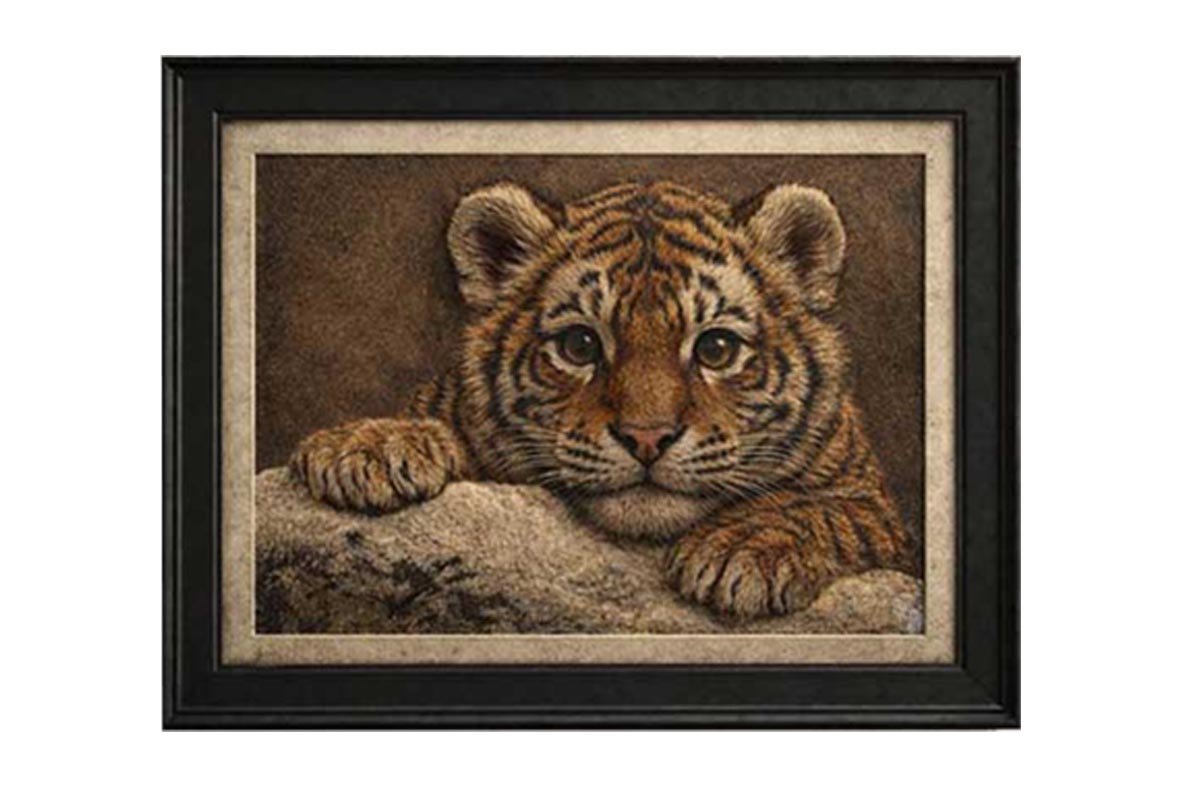
In the modern era, we are obsessed with things that stay new. We buy stainless steel that doesn’t stain, plastic that doesn’t rot, and glass that doesn’t scratch. We have engineered our world to be static. But when it comes to memorializing a life—specifically, the life of a beloved pet—static materials feel cold. They feel dead. A plastic keychain of your dog, printed in a factory, will look exactly the same on the day you buy it as it does the day you throw it away, except perhaps for a crack or a fade. It does not age; it merely deteriorates.
Memory, however, is not static. It evolves. The sharp pain of loss slowly softens into a warm nostalgia. The tears turn into smiles when you recount a funny story. If memory is a living, changing thing, shouldn’t the object that holds that memory be alive too? This is why we work exclusively with Vegetable Tanned Leather (Veg-Tan) for our custom pet gifts. It is one of the few materials on earth that records the passage of time not as damage, but as beauty.
To understand the value of this material, we must look at how it is made. Most leather products on the market today (over 90%) are made of “Chrome Tanned” leather. This industrial method uses Chromium salts to preserve the hide in a matter of days. It is fast, cheap, and results in a product that is essentially “dead”—sealed in synthetic coatings to ensure uniformity.
Vegetable Tanning is different. It is an artisanal method dating back to ancient Egypt and Rome, taking weeks or even months to complete. The core ingredient in this process is Tannin. This is a naturally occurring polyphenol found in plant matter—specifically tree bark (such as Oak, Chestnut, and Mimosa), leaves, and fruits. If you have ever tasted the dryness in a red wine or strong tea, you have tasted tannins.
“Memory is not static. It evolves. The sharp pain of loss slowly softens into a warm nostalgia.”
Unlike the sterile, synthetic properties of Chrome Tanned leather, Veg-Tan leather naturally develops a patina over time. This patina is a result of exposure to sunlight, moisture, and the oils from your hands. It tells the story of time spent together, not just a product being used. As the leather ages, it becomes richer, darker, and more beautiful—an ever-changing symbol of the memories it holds.
Why does this matter for custom pet gifts?
Because when you remember your beloved pet, you want something that evolves with your feelings, something that grows more precious as time passes. The patina on vegetable-tanned leather embodies the gradual transformation of grief into cherished memory.
In the next chapter, we will explore how the process of vegetable tanning compares to other methods and how it impacts the final product. Stay with us as we continue this journey into the living memory of pet memorials.
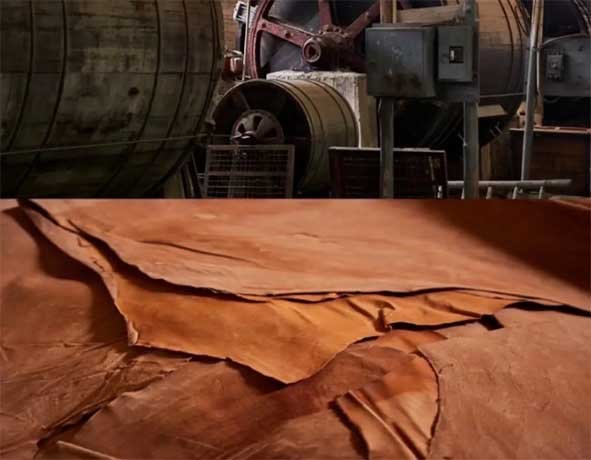
In the tanning process, the raw hide is soaked in a “liquor” of water and bark extracts. The collagen proteins in the skin (which provide structure) chemically bond with the tannin molecules. This is not a surface coating. The tannins penetrate the entire fiber structure, displacing water and stabilizing the protein matrix. The result is a material that is breathable, reactive to UV light, and structural—making it a premium medium for customized pet gifts.
“Patina” is the holy grail of leather ownership. It refers to the soft sheen, darkening color, and character that develops over years of use. But scientifically, what is happening? Why does your pet portrait get darker? It is a complex chemical interaction involving three main mechanisms:
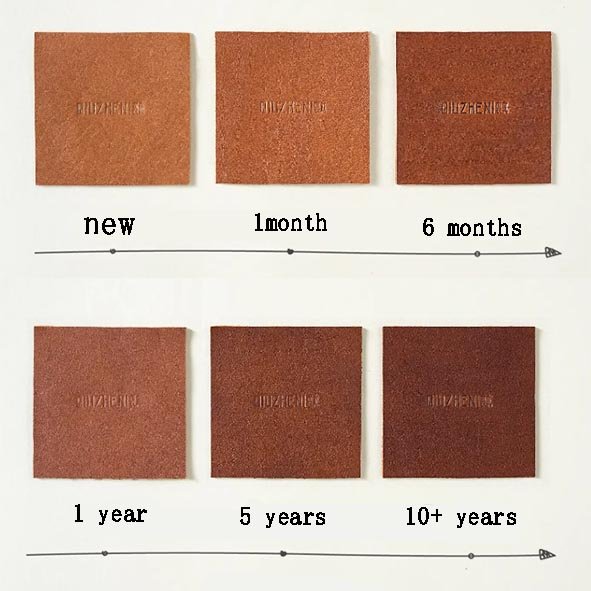
Vegetable tanned leather is photosensitive. When exposed to sunlight (specifically UV radiation), the tannins in the leather oxidize. This is biologically similar to how human skin tans in the sun, or how a sliced apple turns brown when left out.
We can track this aging process scientifically using colorimetric data (L, a, b values). As the leather is exposed to UV light over time, the chemical composition shifts:
This data confirms that the darkening is not “dirt”—it is a chemical maturation. The beige/nude tones oxidize into “Russet” (reddish-brown), then “Hazelnut,” and eventually a deep “Mahogany.”
Because the pores of vegetable tanned leather are open, the material acts like a sponge for oils. Every time you touch your custom pet keychain or wallet, the natural oils from your fingers are transferred to the leather. The fiber absorbs this oil, which darkens the color (giving it transparency and depth) and conditions the fibers, keeping them flexible and preventing cracking.
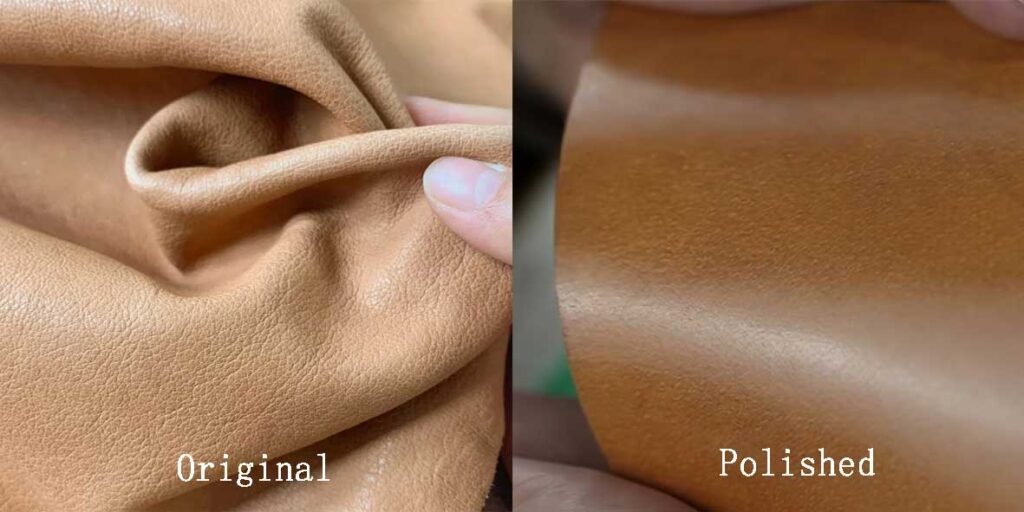
If you carry a leather tag in your pocket or bag, it rubs against fabric thousands of times a day. This micro-friction polishes the surface fibers, compressing them until they reflect light. This creates the coveted “gloss” that makes old leather look like polished wood.
Why does material choice matter when we are grieving a pet? Psychologists often talk about “Continuing Bonds Theory.” Modern research suggests that healthy grieving involves finding new ways to stay connected. When a pet dies, we lose the tactile experience of them—petting their fur, feeling their weight, the warmth of their body next to ours. This “touch hunger” is real and painful.
A vegetable tanned leather object serves as a powerful Transitional Object. Because it changes, it feels “alive.” It records your journey: The darkening of the leather proves that time is passing, but the image of the pet remains. It requires care: You must oil it occasionally, providing a psychological outlet for your nurturing instincts. Leather matches body temperature quickly. When you hold it, it warms up, mimicking the warmth of a living being in a way that metal, glass, or plastic never can. “Grief is just love with nowhere to go. We give it a place to settle.”
To truly appreciate the value of an artisan leather piece, we must compare it to the alternatives found in mass-market custom pet gifts.
| Feature | Veg-Tan (Artisan) | Chrome Tanned (Commercial) | Vegan/PU Leather (Plastic) |
|---|---|---|---|
| Primary Ingredient | Tree Bark Tannins (Natural) | Chromium Salts (Heavy metals) | Polyurethane/PVC (Petroleum) |
| Smell | Earthy, Woody, Sweet | Chemical, New Car Smell | Vinyl, Plastic |
| Aging (Patina) | Yes. Gets darker and more beautiful | No. Designed to stay the same until it cracks. | No. Peels and disintegrates over time. |
| Carvability | High. Holds 3D impressions permanently. | Low. Too soft/spongy to carve. | Zero. Can only be printed. |
| Lifespan | Decades / Lifetime | 5-10 Years | 1-3 Years |
| Biodegradability | Yes. | No (Toxic runoff). | No (Microplastics). |
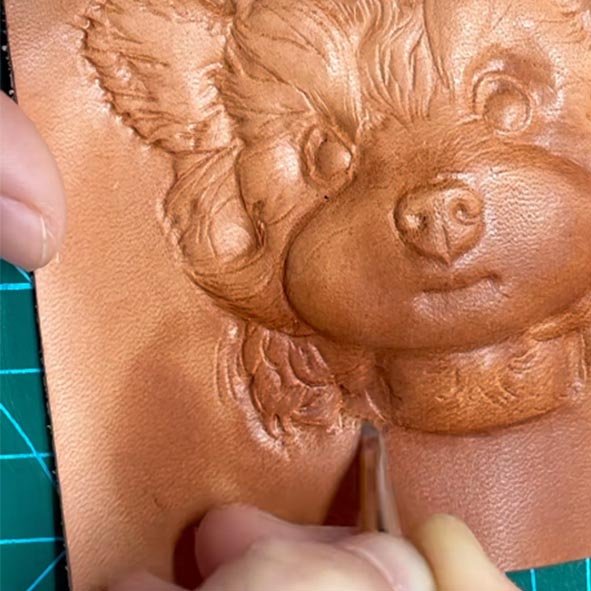
Creating a pet portrait on vegetable tanned leather is an unforgiving art; it is subtractive and permanent. Unlike drawing with a pencil where you can erase, or painting where you can paint over, leather carving cannot be undone.
We utilize the Intangible Cultural Heritage carving techniques of the Northern Chinese nomadic people, which have been adapted and refined specifically for modern realistic styles.
Our Meticulous Carving Process:
Moisture Control: We wet the leather with distilled water until it reaches the perfect moisture content.
Sculpting Texture: Using specialized carving knives and metal modeling spatulas, we sculpt the natural flow and texture of the animal’s fur.
Fluid Motion: It is not just about cutting lines; we use the body of the tool to “flow” across the leather.
Creating Depth: By compressing the leather around these precision cut lines, we create a vivid 3D relief.
Among all our work, carving furred pets is perhaps the greatest test of a craftsman’s patience and mindset. On a naturally brown leather surface, you must simulate that ethereal, fluffy lightness simply through the subtle depth of your touch.
With every stroke, you can actually feel the shifting resistance of the leather fibers beneath the blade. The pet looks like it is rising out of the leather in high definition. This meticulous, heart-led process ensures that our customized pet gifts are truly one-of-a-kind
Owning a vegetable tanned leather item is a commitment, but an easy one. It is a relationship.
“It got a scratch!” Don’t panic. Rub the scratch firmly with your thumb. The heat and friction will move the oils around and blend the scratch into the patina. We call these “life marks.”
“It got wet and has water spots!” If you get a few droplets on it, you might see dark spots. Wipe the entire piece with a slightly damp sponge. This evens out the moisture content so it dries uniformly.
Q: Can you carve white pets?
A: Yes, we can carve white pets! While the natural base color of the leather is brown, we use high-quality acrylic paints to hand-paint white pets. This technique renders the fur delicately and naturally, ensuring the white fur stands out beautifully against the leather background.
Q: Will the image fade?
A: No. Because the image is physically carved into the fiber structure (3D relief), it can never “rub off” like a printed photo. The leather itself will darken over time, but the relief sculpture remains sharp forever.
Q: How long does the customization take?
A: Because of the drying times required between casing, carving, oiling, and sealing, a single piece takes about 3-5 days of active work and resting time. We do not rush the drying process for our customized pet gifts, as that leads to cracking.