Beautiful Plants For Your Interior
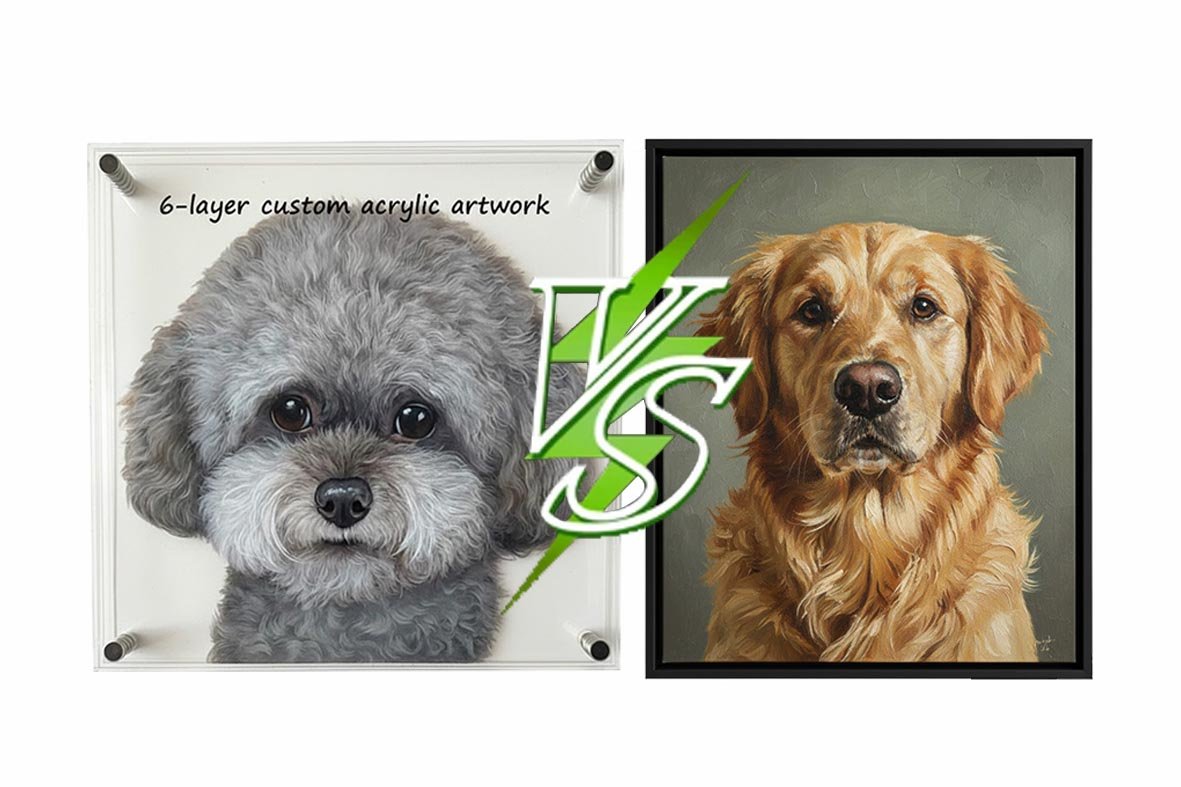
On April 1st, 2017, it felt as if fate had played a cruel joke on me. My little dog, Beibei, passed away due to heart disease. The sense of loss made me desperately want to preserve everything about him. As someone trained in art, I began searching for a pet memorial that could truly carry memory. But many products on the market felt like cold replicas. They were like monuments, recording that “a dog once existed here,” yet unable to tell how Beibei tilted his head while waiting for me to come home,how he transformed from a little dog afraid of baths into a clean-loving big dog, or how he pushed toys into my hands with his unique personality.
This made me think: if the object used to preserve memory itself fades and deteriorates over time, what is the meaning of preservation?
It was this heartbreak and unwillingness to accept it that drove me to create an answer for Beibei with my own hands. I decided to transform emotion into a physical object that could withstand time. It had to be strong and clear enough that, years later, it would still function like a window, accurately bringing me back to the warm days when he was still with me.
This journey of searching for answers for Beibei completely reshaped my understanding of pet portraits. It was no longer just a painting, but a promise about permanence. And this leads to the core question we share: what do we do if the very carrier of memory is unreliable?
Many pet owners who come to me carry a similar concern. They initially commissioned beautiful oil or watercolor pet portraits of their companions. But after a few years, problems slowly appear: the colors in the painting become dim, the once bright eyes of their beloved pet seem covered with a gray haze, and even the canvas itself begins to show fine cracks.
This slow transformation is the most heartbreaking. When customers choose custom pet portraits, their greatest fear is not the price, but whether it will be “worth it.” They fear that one day, when they seek comfort, they will find that the familiar figure in the painting has blurred and cracked. Watching the painting age day by day feels like Beibei slowly disappearing in front of me once again. The helplessness makes breathing feel difficult.
To be painfully honest: canvas has a lifespan. It is made of organic fibers such as cotton and linen. Like a sponge, it continuously expands and contracts with changes in environmental humidity, constantly pulling on the paint layer above. Over time, this causes micro-cracks in the paint layer, like aging skin beginning to wrinkle. An even more hidden enemy is ultraviolet light, which acts like a slow bleach, continuously breaking down pigment molecules and draining vibrant colors of life. At the same time, oxidation in the air is everywhere.
In the end, it comes down to one sentence: we entrusted our most precious memories to materials that will inevitably age. Understanding the limitations of materials is the first step toward finding a better answer.
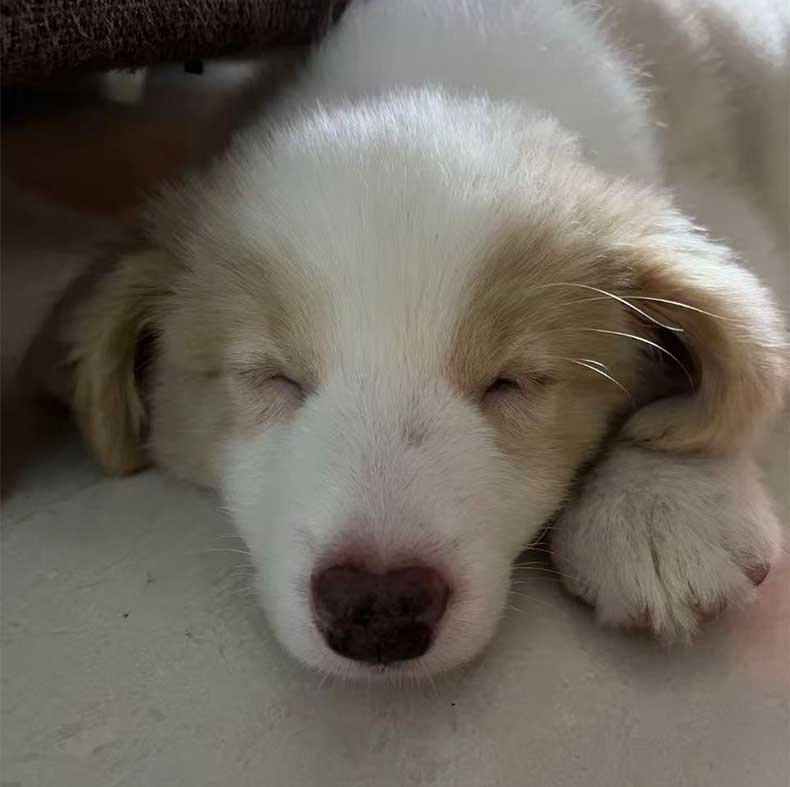
The aging of traditional oil portraits is destined from the moment of their completion. The root cause lies in the inherent fragility of the material system itself. We can understand this inevitable decline through three core dimensions:
| Decay Factor | Scientific Principle | Final Impact on the Portrait |
|---|---|---|
| Canvas “Breathing” | Cotton/linen fibers are hygroscopic, expanding and contracting with humidity. | Leads to craquelure (cracking), compromising the image integrity. |
| Light “Bleaching” | UV energy decomposes organic pigments and degrades oil-based binders. | Colors fade; the oil film yellows, causing the pet’s eyes to lose their luster. |
| Air “Oxidation” | Oil paintings dry through a chemical reaction that continues indefinitely. | Materials lose elasticity, leading to brittleness and surface cracking. |
Canvas acts like a thin sponge that “breathes.” Invisible moisture in the air causes repeated, minute deformations. This slow “creeping” constantly tugs at the pigment layer above. Over the years, these micro-stresses eventually leave spider-web-like fine lines across a custom dog painting, making them risky choices for long-term diy pet memorial ideas.
Light, especially UV rays, acts directly on the chemical bonds. It attacks delicate pigments and decomposes drying oils and gesso. A 2021 study in Polymer Degradation and Stability noted that acrylic binders offer higher UV stability than the alkyd resins often found when painting on glass with oil paints. Another 2015 study showed that oil-based samples exhibited a larger color change value (ΔE), indicating weaker lightfastness compared to modern alternatives.
More fundamentally, the oxidation reaction in oil paintings never truly stops. This process causes the image to become brittle and yellow over decades. While traditional portraits require museum-grade climate control, average home settings rarely offer such protection. This is why many searching for gifts for loss of pet now look beyond the vulnerable nature of traditional canvas.
To find a carrier that could truly resist time, I ultimately chose optical acrylic glass. This shift created a complete transformation in both durability and visual impact for 3D Pet Portraits.
The stability of acrylic glass is fundamental. Unlike canvas, it is completely sealed and does not absorb moisture. Even during the most humid rainy seasons, a painting on glass with oil paints (using stabilized techniques) or modern acrylics on this base will not deform. This solves the fate of the “breathing” canvas, providing a base that ensures every stroke of your custom dog painting remains permanently in place.
Feelings need validation through data. My comparison tests, referenced against industry lightfastness standards, show a clear conclusion: after simulating decades of indoor light exposure, 3D Pet Portraits on acrylic glass retained color far better than canvas. The color change value (ΔE) for acrylic bases typically remains below 1.5, whereas traditional media often exceeds 5, resulting in visible yellowing.
The most surprising element of the 3D Pet Portrait is its visual charm. Because light passes through the transparent layer before reaching the paint, it undergoes refraction. This “optical suspension” magnifies the subtle gradients in a pet’s fur and the glimmer in their eyes. For those seeking meaningful gifts for loss of pet, this technique offers a life-filled moment that gazes back with clarity, far surpassing the depth of a flat canvas.
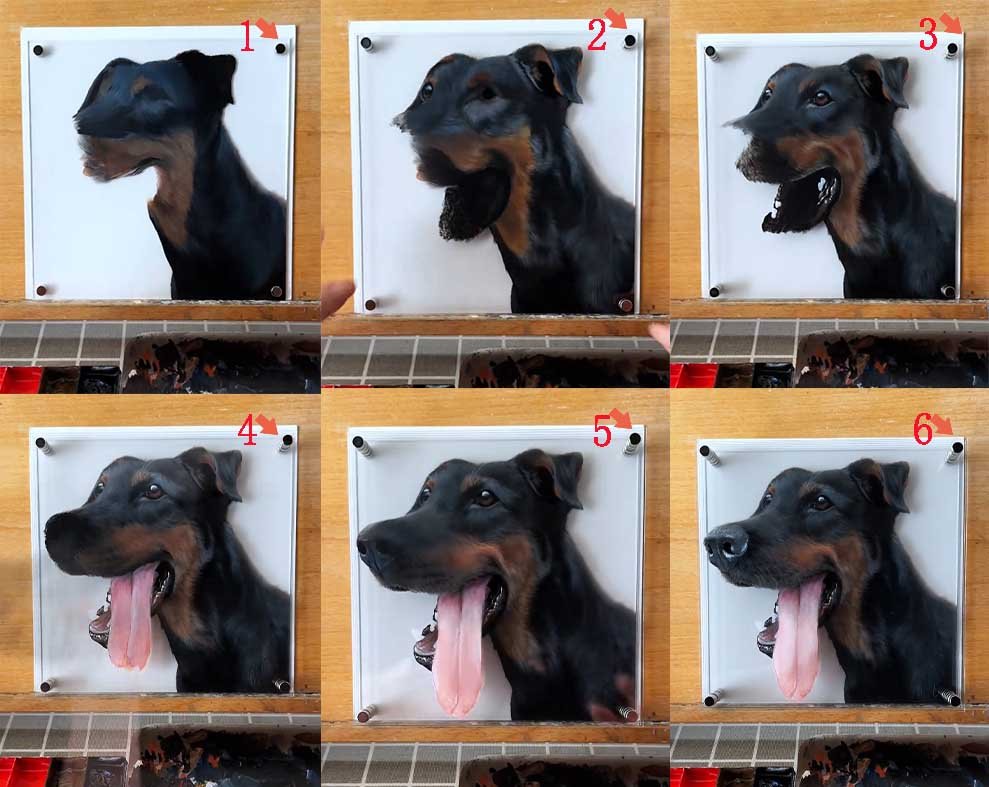
Entrusting me to preserve your memory requires trust. So everything I do is visible to you.
My method of selecting acrylic glass is very direct. Every sheet that arrives, I feel its flatness by hand and tilt it to see whether it shows any bluish or grayish tint — which indicates impurities. What I seek is optical-grade purity, as clear as air, with a thickness sufficient for me to layer paint repeatedly without the surface bending. This is completely different from materials you can find on the market.
The earliest piece I painted on glass was a cat pet portraits five years ago. It still hangs on my studio reference wall. Placed next to a piece I completed last month, its colors remain just as solid, and the glass just as transparent. Time seems particularly gentle with it.
It is durable, but not “invincible.” Simply clean it with an eyeglass cloth or a soft brush. Do not scratch it with knives or hard objects, just as you would not scratch the lacquer finish of your piano. A thoughtfully customized piece should integrate easily into your life, not become a burden that requires constant careful maintenance.
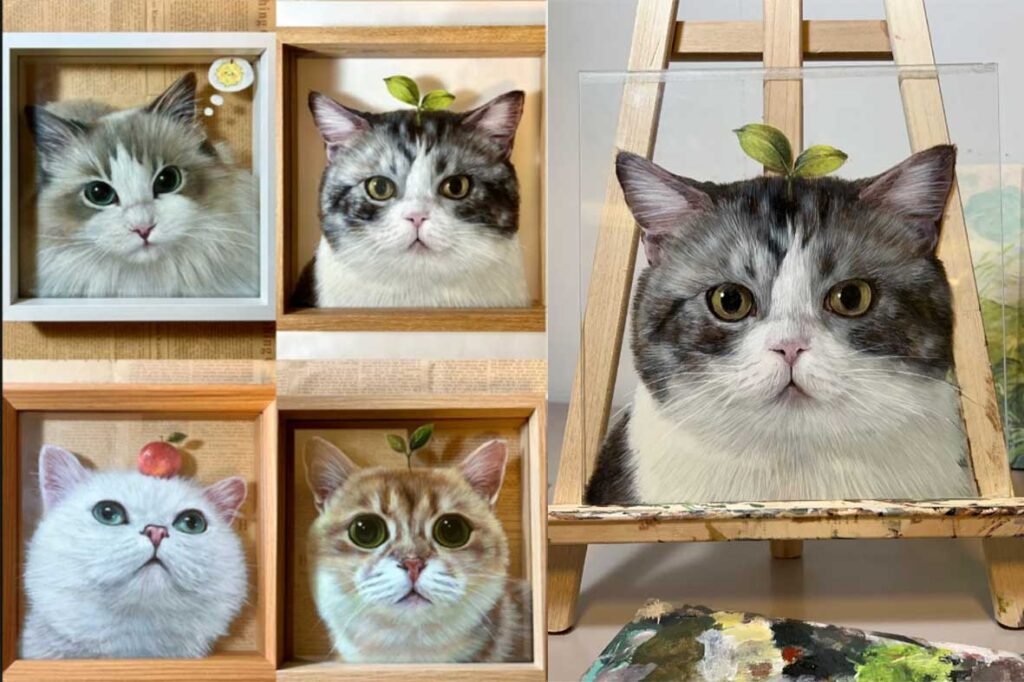
My exploration began with a simple wish: to find a way for memory not to be blurred by time. This journey made me understand that different materials have their own language — leather becomes warm with touch, carrying the gentle marks of time; while acrylic glass gave me the answer of clarity and stillness.
Creating on glass allowed me to find the possibility of “freezing” a moment. When light passes through the transparent medium, color becomes locked within a stable space.
What I pursue is not some artistic peak. I simply hope that when you come home one day after work, push open the door, and see those bright eyes on the wall, you can feel that they are still waiting for you.
If you are also looking for a way to keep that unique expression as clear decades later as the first time you met, then a 3D pet portrait customized on acrylic glass may be a good answer.
I invite you to experience this unique visual language. Or simply talk with me. We can look at the most precious photos in your phone together and discuss how to transform them into a piece worthy of accompanying generations.
Q1: Why choose acrylic glass over traditional canvas for a pet memorial?
A1: Canvas is essentially an organic fiber that “breathes” and expands with seasonal humidity, which is often the culprit behind fine cracks or blurred eyes in portraits. To prevent these precious memories from fading over time, I use optical-grade acrylic glass as the substrate. It not only completely isolates the deformation caused by moisture but also locks in every drop of color through my “6-layer layering technique,” ensuring your Pet Portraits remain as vivid as if your beloved companion were still with you decades later.
Q2: What is the visual difference between a “3D Pet Portrait” and a regular flat painting?
A2:Traditional Custom Dog Paintings often have light striking the pigment directly, which lacks a sense of layering. When creating on acrylic glass, light passes through the transparent medium, creating a unique refractive effect. This sense of “optical suspension” gently magnifies the details of the pet’s fur and the agile glimmer in its eyes, creating a profound sense of depth across dimensions. It is no longer just a painting hanging on the wall; it is more like a frozen, life-filled warm moment.
Q3: How should I clean this glass pet memorial? Is it fragile?
A3:Despite being called “glass,” optical acrylic is actually very sturdy and possesses excellent UV resistance, so it won’t become brittle or yellow with oxidation like traditional oil paintings. In daily life, you don’t need to take extraordinary care; just occasionally wipe away dust with an eyeglass cloth. It doesn’t require a professional environment with constant temperature and humidity. It was designed from the beginning to integrate easily into your home life as a Gift for loss of pet that can accompany your family for generations.