Beautiful Plants For Your Interior
Introduction
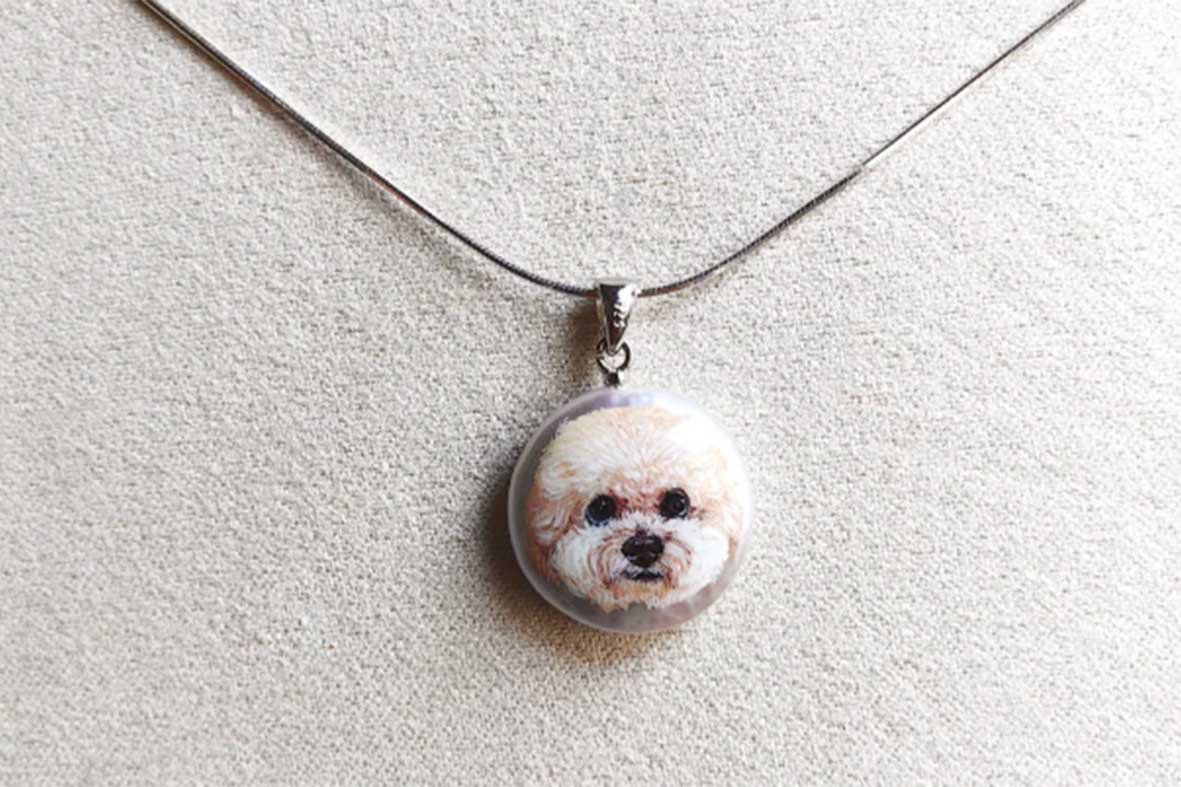
Pet Portrait Necklace used to mean something.
Not a trend. Not a keyword. Something slower.
It implied a person sitting down, adjusting a line that didn’t feel right, stepping back, then leaning in again. Time was part of it. Frustration too.
Now the phrase is everywhere.
Scroll for ten seconds and you’ll see it—$19.9, “hand-painted,” “custom,” “artisan.” The words stack on top of each other until they stop carrying weight.People ask me the same question, almost word for word:
Why is your Pet Portrait Necklace over $100 when others look nearly identical?At some point, I stopped trying to explain it verbally.
Instead, I ordered one of the cheaper versions. Not to compare—just to understand.
When it arrived, I didn’t rush. I opened the package slowly, the way you do when you’re expecting something fragile.
I held it under a side light. Rotated it once.
Then I paused.
That pause wasn’t confusion. It was recognition.
This wasn’t painted. Not even close.
It was a printed image, sealed under a clear resin layer. Perfectly smooth. Uniform. No resistance.
Too perfect.
Real pet art resists you.
That’s the part people don’t see in finished photos. The resistance. The small corrections that happen before anything looks “right.”
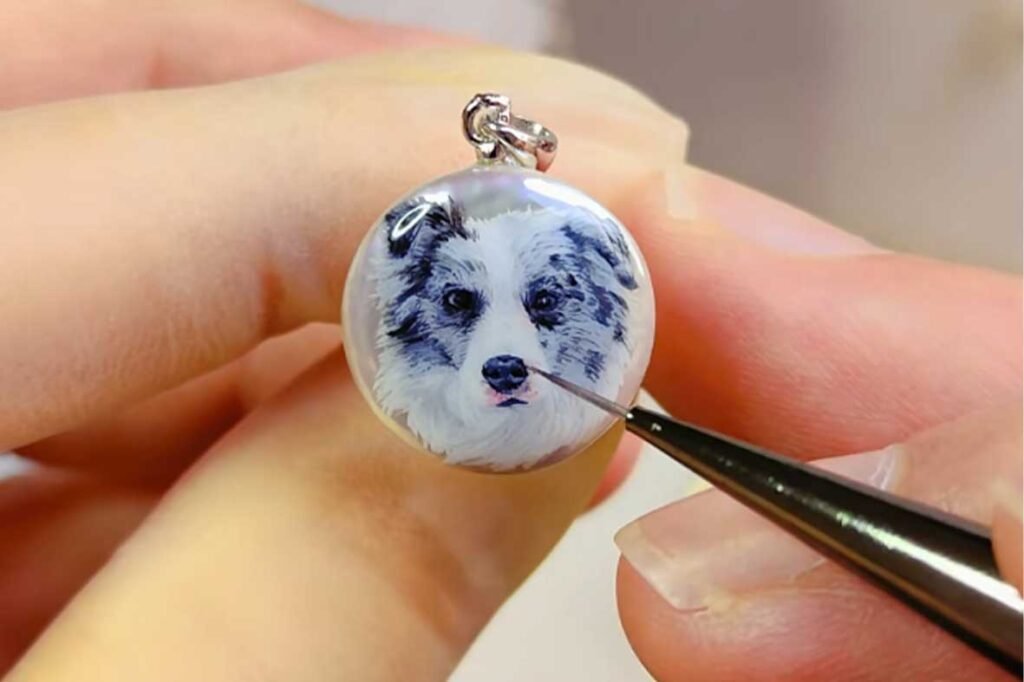
On a flat canvas, you have space. On a Pet Portrait Necklace, especially one built on a pearl or small metal base, you don’t. The working surface is often around 1.5 centimeters. Sometimes less.
The brush drags.
Pigment pools.
Edges refuse to stay clean.
You adapt.
Factories remove all of that.
They replace uncertainty with process. Every step is controlled, predictable, repeatable.
UV printing lays down the image.
Heat or light cures the ink instantly.
A resin dome seals everything in place.
A low-cost Pet Portrait Necklace moves through that system in minutes.
Layering and glazing are skipped entirely; hesitation isn’t part of the code. You’ll never find a moment where a technician pauses to wonder if an eye feels “off.”
Because nothing is being felt.
The result is clean. Almost clinically so.
Edges are perfect. Colors are even. Surfaces are flat.
And that’s exactly the problem.
Most people start with photos.
They zoom in, compare listings, check reviews.
But there’s a faster way to filter things out.
Touch it.
Run your fingernail lightly across the surface of the necklace.
If it feels completely smooth—like glass—what you’re touching is resin over a printed layer.
A real Pet Portrait Necklace doesn’t feel like that.
It carries micro texture. Subtle variations. Slight ridges where pigment has built up unevenly.
You might not notice it immediately. But your hand will.
I remember working on a black Labrador piece. The fur was straightforward. The challenge was the eye.
That wet, reflective highlight.
I spent 47 minutes building it.
Thin layer. Wait.
Glaze. Wait again.
Soften the edge. Adjust the center.
At one point, it looked finished.
Then a dust particle landed directly on the highlight while the surface was still open.
Barely visible. Enough to ruin the depth.
I tried to lift it out. That made it worse.
So I removed everything and started over.
That kind of reset doesn’t exist in mass production.
And yet, that’s exactly where the texture comes from.
Not from tools. It’s born from a long chain of hard decisions, constant corrections, and the necessary mess of failure.
Every object has a cost structure.
A $20 Pet Portrait Necklace isn’t cheap by coincidence. It’s designed to be cheap.
The printed film costs almost nothing.
The base metal is usually alloy—lightweight, plated just enough to look convincing in product photos.
The resin is bulk-poured and quick-cured.
Labor is minimal.
Machines do most of the work.
So what are you actually paying for?
Volume. And presentation.
The illusion of customization is the real product.
That’s why listing photos often look slightly better than what arrives. They’re optimized. Selected. Sometimes even enhanced.
They’re not necessarily fake.
They’re just showing the best possible version of something that was never built to be consistent.
Hand-painted work behaves differently.
It’s slower. Less predictable. Occasionally frustrating.But that inconsistency is exactly what gives it character.
Failure doesn’t show up in product descriptions.
But it’s always there.
In hand-painted work, failure is constant.
I’ve discarded pieces after two hours because something felt slightly off. Not obviously wrong. Just enough that I knew it wouldn’t hold up under closer inspection.
White fur is where it gets difficult.
It looks simple. It isn’t.
White isn’t just white. It’s layers—cool grays, faint blues, sometimes a hint of warmth to keep it from going flat.
Each layer needs to stay clean.
If a single particle of dust settles into wet paint, it becomes part of the surface.
You can try to remove it. Most of the time, that damages the surrounding area.
So you start again.
Factories don’t restart. They don’t question.
They continue.
That’s the difference between production and creation.
Material quality isn’t about labels. It’s about behavior.
Acrylic paint builds in layers.
Each layer needs time—not to fully dry, but to stabilize before the next one is applied.
Too early, and the layers mix unintentionally.
Too late, and transitions become rigid.
There’s a narrow window where things work.
Then there’s resin.
Lower-grade resin yellows over time. It also traps micro-bubbles if cured too quickly.
Proper curing takes hours. Sometimes longer, depending on humidity and temperature.
Many low-cost Pet Portrait Necklace products cut time here.
They accelerate curing.
Speed replaces stability.
The piece looks fine on day one.
That doesn’t mean it stays that way.
This is where the issue becomes more personal.
Because many people buy a Pet Portrait Necklace as a Pet Memorial Gift.
Something that represents a memory. Something meant to last.
But over time, differences appear.
Edges begin to yellow.
Colors flatten.
In some cases, the top layer starts to separate slightly.
Customers have brought these pieces to me, asking if they can be restored.
They can’t.
A sealed print doesn’t allow for correction. Damage is locked in.
One client told me quietly,
“I thought this would stay the same.”
That expectation makes sense.
But the product they bought wasn’t built for longevity.
It was built for speed.
If you’re choosing a Pet Portrait Necklace as a Cat Mom Gift or Dog Mom Gift, try looking at it differently.
Imagine placing it under a 10x macro lens.
Cheap pieces don’t hold up well under magnification.
The illusion breaks.
Eyes dissolve into visible pixel patterns.
Fur loses direction and becomes a soft blur.
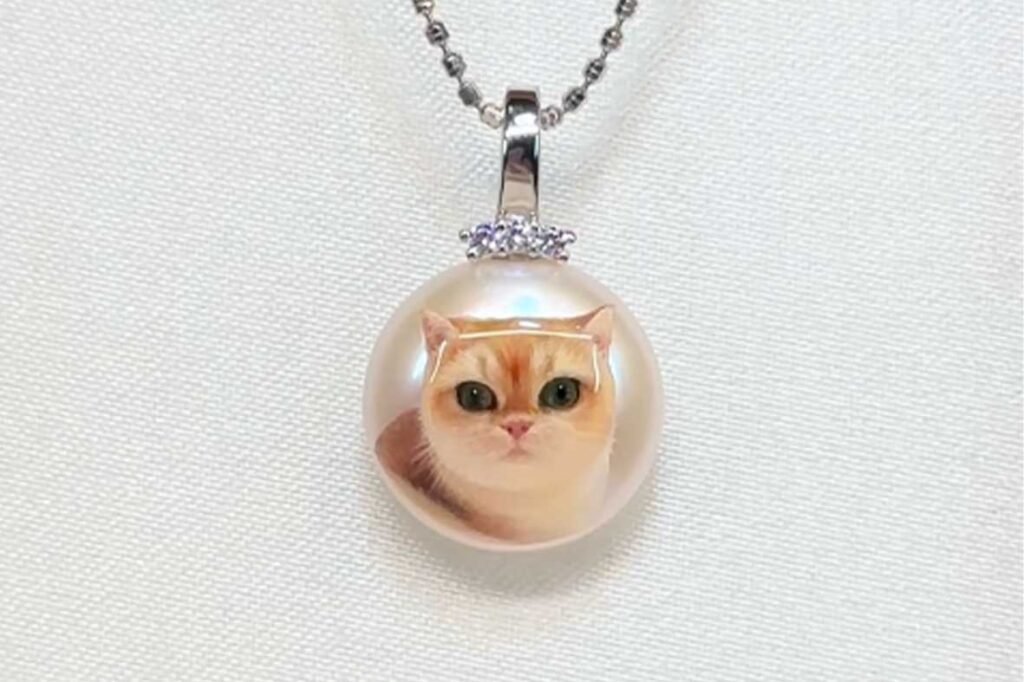
A real Pet Portrait Necklace behaves differently.
You’ll see stroke direction.
You’ll notice areas where pigment was layered, adjusted, then refined.
These details aren’t dramatic.
But they’re present.
And once you notice them, they’re hard to ignore.
You don’t need training for this.
Just slow down for a moment.
Tilt the necklace under side light. Look for surface variation.
Run your nail across it. Feel for resistance.
Notice the smell—industrial adhesives often leave a sharp chemical trace.
Ask for in-progress images. Real work leaves a trail.
Zoom into the eyes. Look for pixels or layered pigment.
That’s enough.
Ten seconds.
Most mass-produced Pet Portrait Necklace products won’t pass all of those checks.
Magnification removes ambiguity.
Printed surfaces break into uniform dots. Consistent. Predictable.
Hand-painted surfaces don’t break.
They build.
Pigment sits at different levels. Edges shift slightly. Some areas carry more density than others.
These variations aren’t mistakes.
They’re records of what happened during the process.
Speed answers questions before you even ask them.
These pieces aren’t flawless.
But they’re grounded in process.
You can tell the difference.
Not always immediately.
But time makes it obvious.
Cheap pieces tend to fade quickly.
Real ones settle in.
And once you’ve handled a genuine Pet Portrait Necklace—one shaped by time, correction, and intent—
it becomes difficult to look at the alternatives the same way again.
Not because of price.
Because of what’s missing.