Beautiful Plants For Your Interior
Introduction
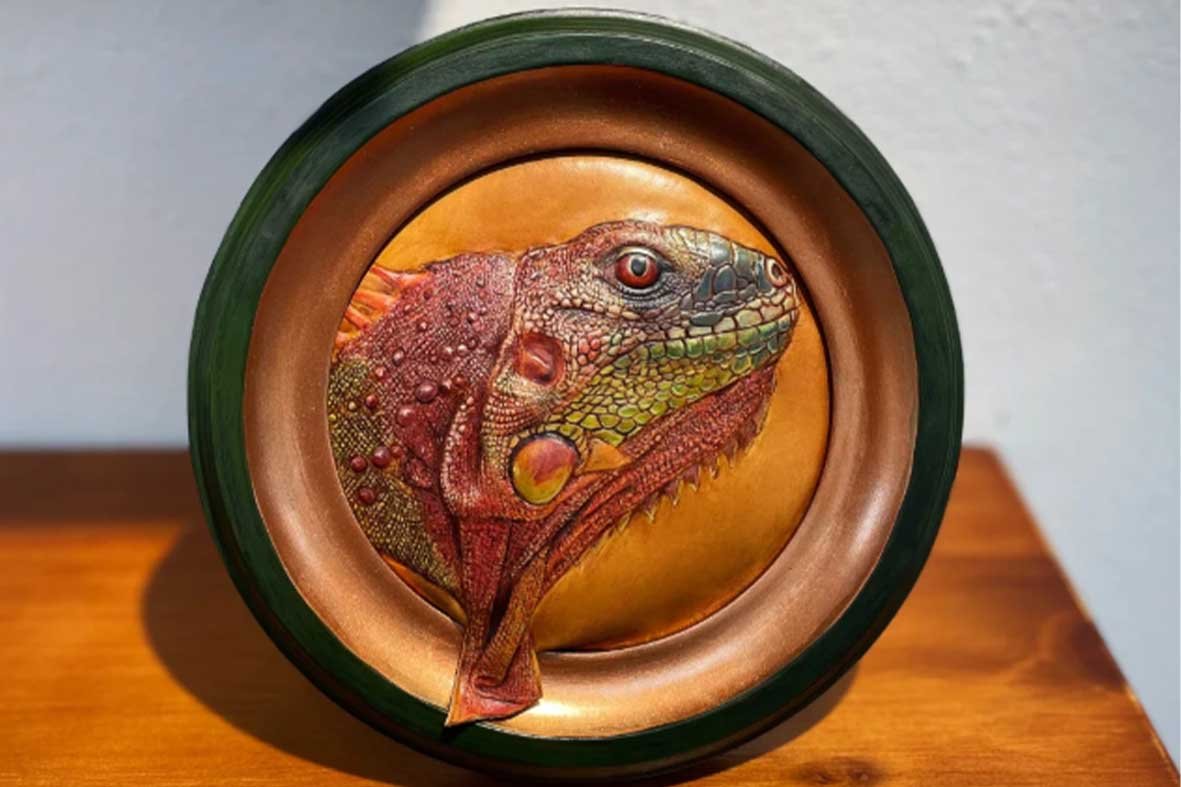
The smell and feel of leather are among the most unique aspects of handmade creations. Every cut of the knife doesn’t just reveal texture; it uncovers the subtle changes in the chameleon’s skin under sunlight, or the soft glow of snake scales in moonlight. For me, carving isn’t just about recreating animal shapes—it’s about allowing these cold-blooded creatures to come alive through touch and detail. Each time I work with leather, I feel as if I am holding a conversation with the animal itself, interpreting its quiet existence and unique personality through the medium. The process is tactile, intimate, and surprisingly meditative: the leather responds to pressure, to direction, to the rhythm of my hands, much like the way a chameleon’s skin subtly shifts as it senses the environment.
Every piece of vegetable-tanned leather has its own unique vitality. When I cut and carve the leather, it feels like I’m touching the essence of the reptile. The natural grain, the slight variations in thickness, the responsiveness of the surface—all of these features allow me to replicate the intricate textures of snakes or chameleons.
For example, when replicating a snake’s scales, I notice the small differences from one segment to the next. Some scales are slightly raised, catching light in a way that seems almost metallic. Others are matte, soft, and flexible, almost like a memory of movement embedded in the material. For a chameleon, the challenge is different: their skin is not just textured but alive with subtle gradients, shifting colors, and minute ridges that reflect the light differently depending on the angle. Using vegetable-tanned leather allows me to mimic these phenomena, carving tiny grooves and embossing minute lines to simulate natural irregularities.
Over time, this leather develops a patina, just like how snake scales reveal their natural sheen as they age. Each piece becomes a living object, recording the passage of time, handling, and light. Unlike synthetic alternatives, vegetable-tanned leather breathes and changes, enhancing the realism and emotional resonance of the finished artwork.
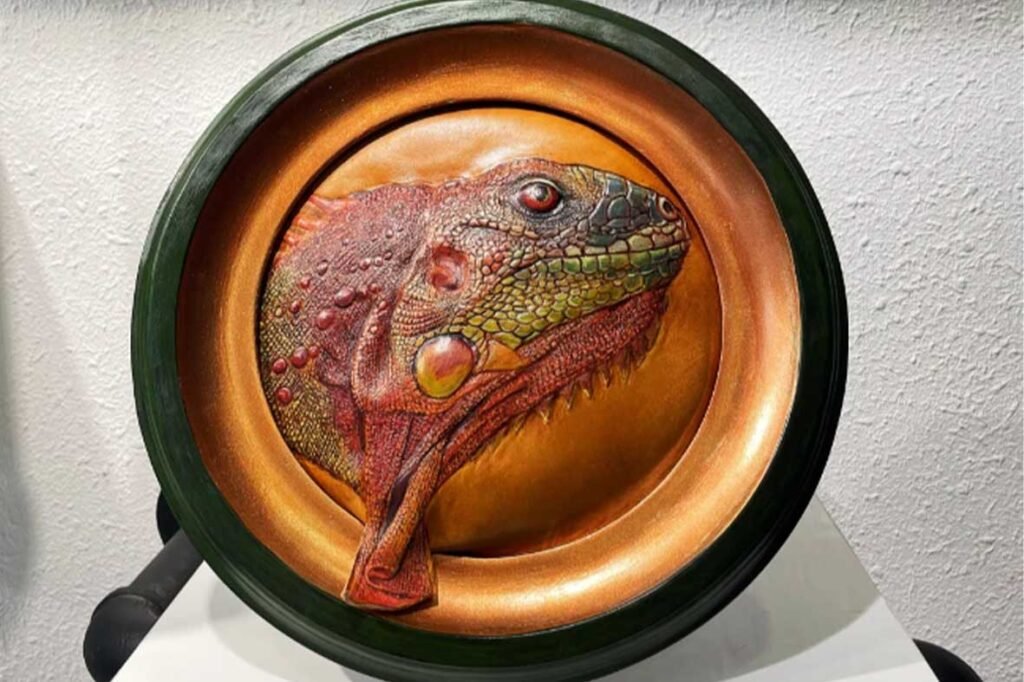
Cold-blooded creatures often go unnoticed in popular pet culture, yet their elegance is undeniable. In my carvings, I focus obsessively on details that might otherwise escape attention. A snake’s tapering head, the tiny notches along a single scale, the subtle reflection in the eye—all demand patience and a careful eye. A chameleon’s skin, meanwhile, presents a puzzle of patterns and textures that shift depending on light and mood.
My obsession begins with observation. I spend hours examining photographs, noting every irregularity in color or shape. I study the way scales overlap, the thickness of each segment, and even how light dances across the surface in subtle gradients. These nuances are crucial—they give the creature its sense of life and presence. When carving, each stroke must echo these subtleties: too shallow, and the skin looks flat; too deep, and the balance of shadow and highlight is lost. Painting adds the final layer of vitality, using thin 0/3 liners to enhance depth without overpowering the natural grain. The process is painstaking, but each successful stroke is an intimate dialogue with the creature itself.
Creating a custom reptile portrait is both a technical and artistic challenge. Each stage demands full attention and deliberate action:
Every custom piece is a tribute to the individual beauty of reptiles. Creating a personalized leather portrait is not merely about craftsmanship; it is an act of recognition. Snakes and chameleons are often overlooked, yet their silent grace and subtle elegance deserve acknowledgment. Through leather, I attempt to memorialize their unique charm, transforming cold-blooded creatures into lasting, expressive artwork.
The act of crafting these gifts is almost ceremonial. I imagine the owner’s pride and attachment, translating that energy into the leather. Each curve, line, and color shift is chosen to resonate not only with the physical form of the pet but also with its spirit. When finished, the piece carries layers of time, attention, and respect. It is more than a gift—it is an object that embodies devotion, care, and artistic reverence.
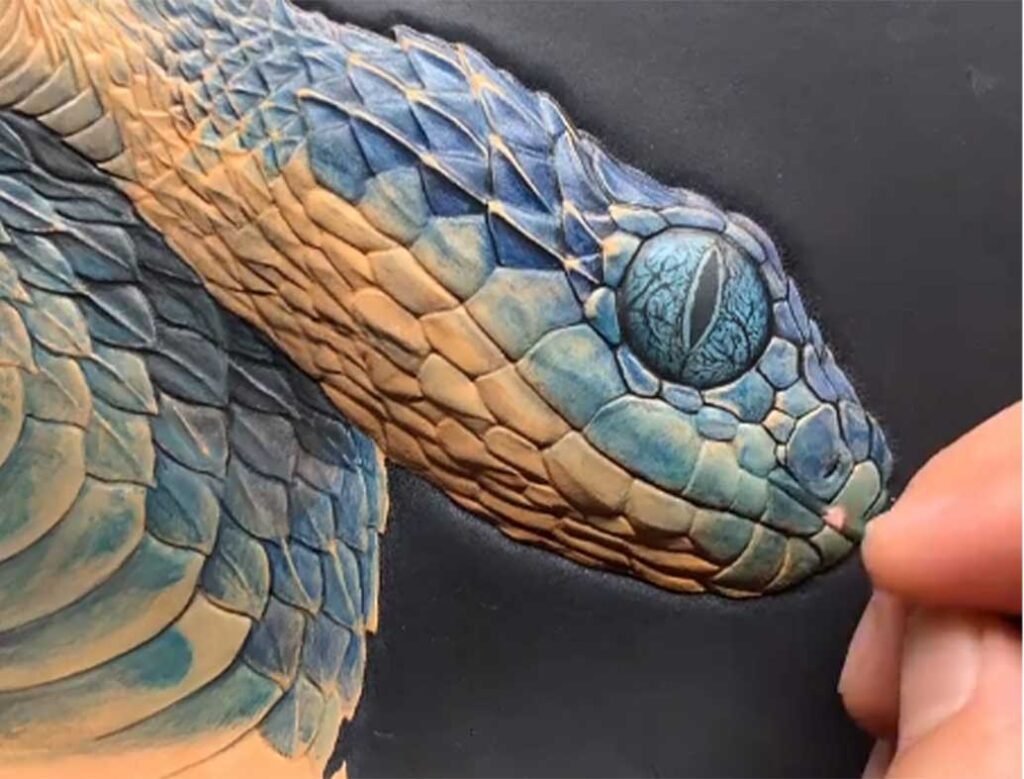
By following these steps, each leather portrait becomes more than a visual representation; it transforms into an artifact infused with the essence of the creature. From the initial observation to the final painting, every detail is an opportunity to honor the silent beauty of reptiles, bridging the gap between artistry and the natural world.
In conclusion, bespoke leather art for snakes and chameleons is not just a craft—it is an ongoing exploration of texture, light, and life. Each portrait holds a story, not only of the pet but also of the painstaking care and attention that goes into every stroke, every cut, and every hue applied to the leather. It is a celebration of species often overlooked, a gift that transforms appreciation into enduring artistry, and a testament to the quiet dialogue that occurs when hand, heart, and nature converge.